Introduction
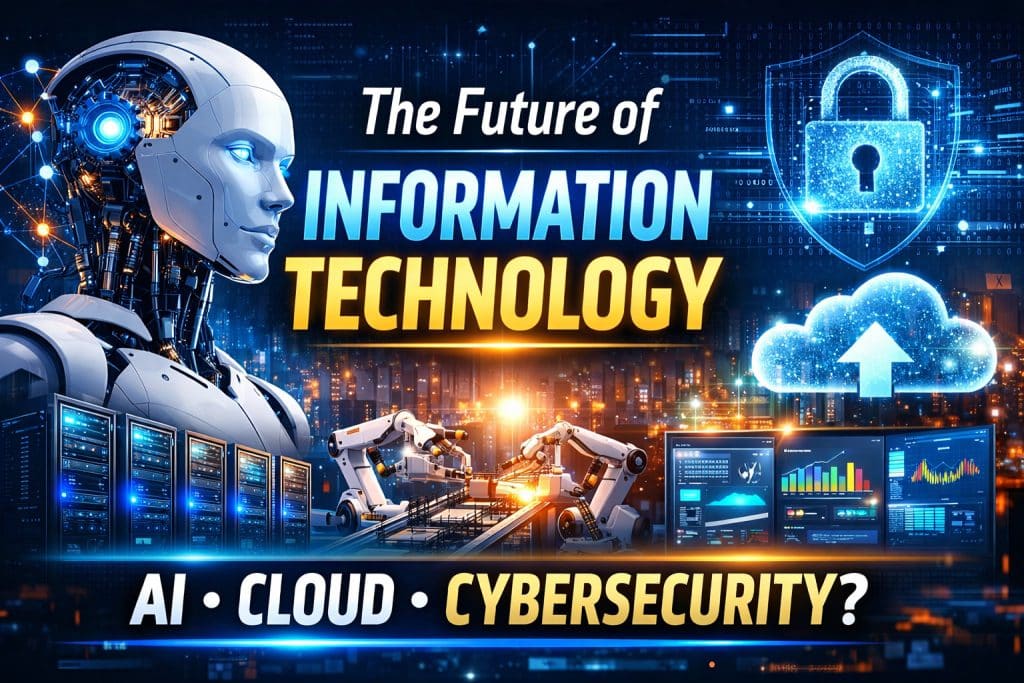
Information Technology (IT) has become the backbone of modern society. From small businesses to global enterprises, technology plays a critical role in improving efficiency, communication, and innovation.
In recent years, rapid developments in artificial intelligence, cloud computing, and cybersecurity have changed the way organizations operate. Understanding these trends is essential for businesses and individuals who want to stay competitive in the digital age.
1. Artificial Intelligence Is Transforming Industries
Artificial Intelligence (AI) is one of the most powerful technological advancements in modern IT. AI systems can analyze massive amounts of data, automate repetitive tasks, and even make predictions.
Today, AI is widely used in areas such as:
- Customer service chatbots
- Data analysis and forecasting
- Smart assistants
- Healthcare diagnostics
Companies that adopt AI technologies are able to increase productivity and improve decision-making.
2. Cloud Computing Is the New Standard
Cloud computing has revolutionized how businesses store and manage data. Instead of relying on expensive physical servers, companies can now access scalable computing resources through the internet.
Some major benefits of cloud computing include:
- Lower infrastructure costs
- Remote accessibility
- Better data backup and security
- Scalability for growing businesses
Major cloud platforms such as AWS, Microsoft Azure, and Google Cloud continue to expand their services to meet increasing demand.
3. Cybersecurity Is More Important Than Ever
As technology grows, cyber threats also become more sophisticated. Cybersecurity has become a top priority for organizations around the world.
Common cybersecurity threats include:
- Phishing attacks
- Ransomware
- Data breaches
- Identity theft
Investing in strong security systems, employee awareness, and regular system updates is essential to protect sensitive information.
4. Automation and Digital Transformation
Automation is helping businesses reduce manual work and improve operational efficiency. Many organizations are now integrating automation tools into their daily operations.
Examples include:
- Automated marketing systems
- AI-powered analytics tools
- Robotic process automation (RPA)
- Smart manufacturing technologies
Digital transformation is no longer optional; it is necessary for businesses that want to remain competitive in today’s fast-changing market.
Conclusion
The future of Information Technology is filled with exciting opportunities and challenges. Technologies such as artificial intelligence, cloud computing, cybersecurity, and automation will continue to shape the digital world.
Businesses and individuals who stay informed and adapt to these changes will be better prepared for the future.
As technology continues to evolve, one thing is clear: IT will remain a driving force behind innovation and global progress.
